From Risk Management to Resilience: The Future of Cybersecurity
As we enter 2026, businesses are racing ahead with generative and agentic AI, reshaping every corner of business. Innovation, however, has a shadow: global AI-assisted cyberattacks have surged past 28 million incidents, a staggering 72% increase year over year.
Organizations increasingly rely on automation and algorithmic decision-making, and with it comes a new threat landscape, one where adversaries harness AI’s speed, scale, and intelligence to craft attacks that are as context aware as they are relentless.
Examples include:
- Model Poisoning Malicious or corrupted datasets can distort AI training, leading to biased predictions and compromised decisions in data-critical industries.
- Unauthorized Model Extraction Attackers can clone proprietary AI models through reverse engineering, resulting in IP theft, lost competitive advantage, and reputational risk.
These emerging risks are driving a new wave of cybersecurity strategies designed specifically to protect AI systems at scale.
Cybersecurity Trends Defending the AI Era
- Data Lineage & Cryptographic Provenance AI models are only as reliable as the data that feeds them. To counter model poisoning and deepfake manipulation, enterprises are adopting cryptographic verification systems that track data origin, transformations, and usage. Immutable, auditable records ensure that training datasets remain trustworthy, protecting model integrity and reinforcing regulatory and stakeholder confidence.
- Quantum-Safe Security & Post-Quantum Encryption Faster AI-driven decisions are pushing attackers to target not just systems, but the models and data that power them. To counter this risk, organizations are piloting quantum-resistant encryption and Quantum Key Distribution (QKD) to protect proprietary AI models and prevent intellectual property theft. These measures safeguard AI assets from future decryption attacks and help maintain competitive advantage in a rapidly evolving threat landscape.
- Zero Trust Security ModelUnauthorized access and AI model extraction are top concerns for enterprises in 2026. Zero trust frameworks mitigate these risks by continuously verifying every user, device, and connection before granting access. By eliminating implicit trust and enforcing strict access controls, organizations can prevent model exfiltration, reduce insider threats, and secure AI-driven workflows end to end.
With AI becoming the backbone of enterprise decision-making, cybersecurity can no longer be reactive. Protecting model integrity, ensuring verifiable data lineage, and embedding advanced security controls from the start will define resilient organizations.

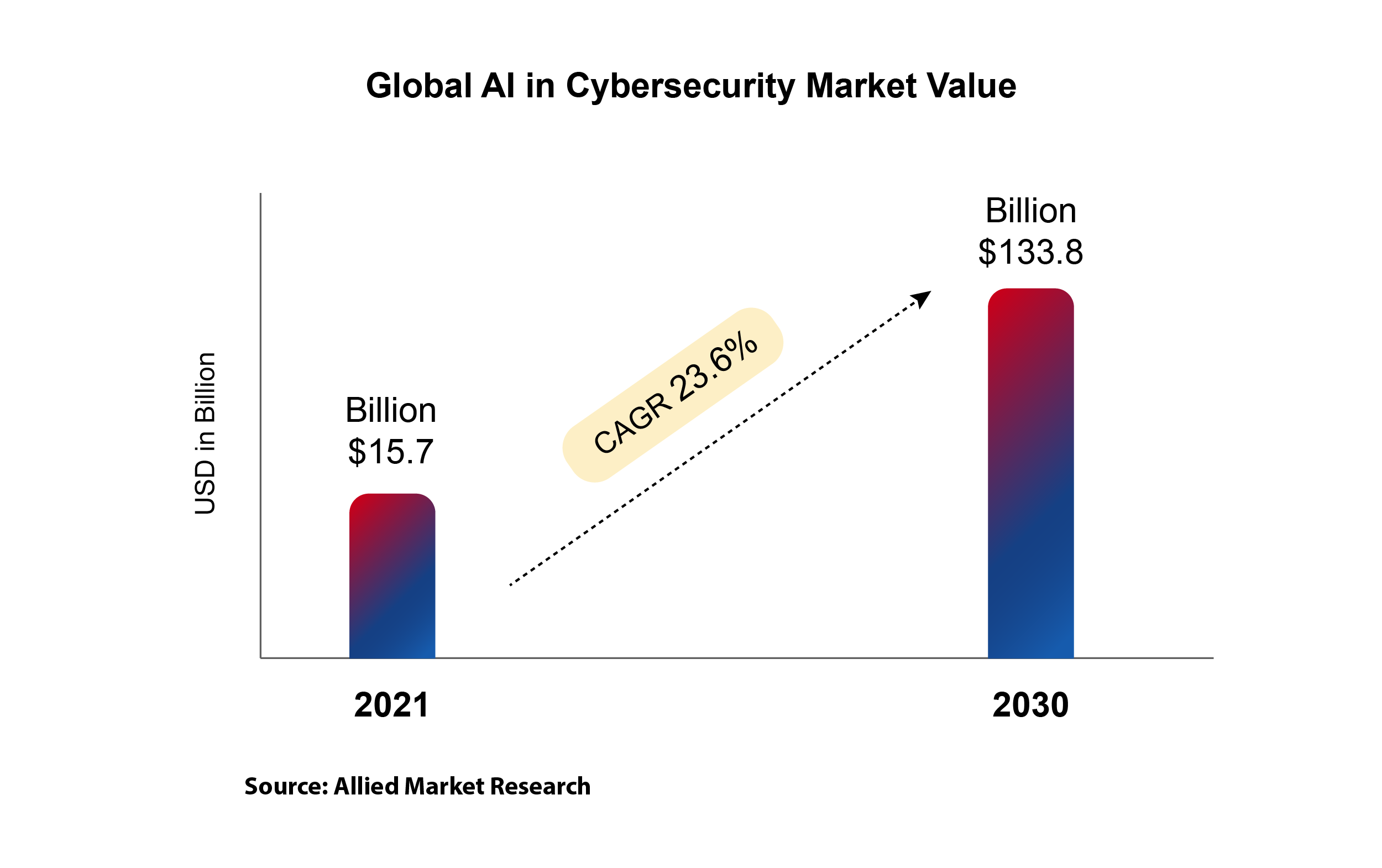
The global AI in cybersecurity market value is poised for a significant growth by 2030.

Thanks for reading. We look forward to connecting again soon.
Subscribe to our Newsletter
Ready to Build the Future of Fintech?
Partner with M2P Fintech to create seamless, compliant, and scalable financial solutions that redefine possibilities in fintech.