M2p Logo
shape-1

Powering
Logo
Global Fintech with
Intelligence 
at 
Every 
Level 
Logo

Our modular, intelligence-driven infrastructure empowers banks, fintechs, and enterprises to build agile, data-rich, and deeply personalized digital financial products.

With AI woven into every layer, we’re transforming how the world experiences finance.

Trusted by industry leaders

Join the ranks of leading banks, fintechs, NBFCs, and global enterprises powering their
financial ecosystems with trusted, innovative solutions

Powering Digital Finance

Delivering End-to-End Fintech Solutions

Unlock a full suite of digital finance capabilities, across banking, payments, lending, and data, enhanced with tailored, insight-led services.

Banking

Next-gen Core Banking Solution

Modernize core banking infrastructure with cloud-native, API-first solutions that streamline operations, ensure compliance, and deliver customer-centric digital experiences

Next-gen Core Banking Solution

Lending

Agile Digital Lending Suite

Launch and manage tailored lending products, from personal loans to BNPL, with a modular platform that accelerates go-to-market and supports end-to-end lifecycle management

Agile Digital Lending Suite

Payments

Unified Payments and Card Infrastructure

Power seamless payments with flexible, scalable infrastructure for card issuance, acquiring, and processing across every channel, use case, and device

Unified Payments and Card Infrastructure

Data

Unlocking Insights with Data Intelligence

Turns data into decisions by unlocking customer insights, mitigating risk, and enabling personalized engagement with precision.

Unlocking Insights with Data Intelligence

VAS

Elevating the Fintech Experience

Launch and manage tailored lending products, from personal loans to BNPL, with a modular platform that accelerates go-to-market and supports end-to-end lifecycle management

Elevating the Fintech Experience
Solutions

Powering Innovation Across Financial Spectrum

We equip financial institutions with agile infrastructure that adapts, scales, and thrives in tomorrow’s financial landscape

Banks

NBFCs

Lending

Corporate

Stock Brokers

Insurers

Fintechs

Future-Proof Your Core Banking

Transform your banking stack with M2P’s intelligence-first infrastructure, built to modernize core systems, streamline channels, and unlock new growth opportunities

Turing (Core Banking)

Arrow Icon

Treasury

Arrow Icon

Channel Banking

Arrow Icon

Neo Banking

Arrow Icon

IMPS

Arrow Icon

UPI

Arrow Icon

Debit Cards

Arrow Icon

Wallet

Arrow Icon

Forex

Arrow Icon

Gift Cards

Arrow Icon

GPR

Arrow Icon

Prepaid Cards

Arrow Icon

Compliance & Risk Management tools

Arrow Icon
Explore Banking Suite
Banking Solutions

Delivering at Scale, Across Borders

Take Your Business Worldwide with M2P

Delivering at Scale, Across Borders

800+

Fintech Engagements

300+

Lending Partners Onboarded

200+

Banking Institutions Engaged

50+ mn

End Customers Serviced

30+

Countries with Active Operations

20+ bn

Transactions Processed

Custom-Fit Solutions

Why M2P?

Because the future of finance demands
more than digital transformation

We bring the digital ambitions of banks, lenders, and fintechs to life through our next-gen, AI-enabled product suite

Custom-Fit Solutions

Custom-Fit Solutions for Your Goals

Leverage our configurable microservices and secure AI/ML capabilities to create tailored financial products and experiences for your customers

Custom-Fit Solutions

Digital Transformation, Accelerated

Achieve 5X faster go-to-market and efficiency with our cloud-agnostic product suite, ensuring digital competitiveness for your financial institution

Custom-Fit Solutions

Custom-Fit Solutions for Your Goals

Leverage our configurable microservices and secure AI/ML capabilities to create tailored financial products and experiences for your customers

Custom-Fit Solutions

Smarter Decisions, Optimized Results

AI-driven data intelligence enhances risk management, customer engagement, and operational efficiency in real time

Custom-Fit Solutions

Seamless Growth, Limitless Possibilities

Powering large traditional and digital use cases, from the largest banks to the smallest fintechs, locally and globally

Custom-Fit Solutions

Secure and Regulatory-Ready

PCI DSS and ISO 27001 certifications, advanced encryption, and continuous monitoring ensure global and local regulatory standards are met

Testimonial

Partner Perspectives

We don't just talk, we deliver it. Built on credibility, proven by results
and trusted by thousands. See why they choose us

Ritesh Pai

Ritesh Pai

Ex-CDO, Yes Bank

Usually, when we partnered with fintech, we always guide them with the nuances of regulations. But, when we partnered with M2P, we found that our wavelengths matched. We eventually co-created, collaborated, and launched many products and solutions in a short time.

Rajan Bajaj

Rajan Bajaj

Founder & CEO, Slice

When we were looking out for payment infrastructure companies, we evaluated few partners in India. M2P was the only one where we saw that the team was trying to build the whole technology stack inhouse. Everyone at M2P is approachable and agile. It has been a great experience working with M2P.

Pei-Fu Hsieh

Pei-Fu Hsieh

CEO & Co-Founder, KARBON Card

Before we chose M2P, we had evaluated quite a few options in the market. We found M2P to be the easiest platform to connect. We wanted someone who can understand the start-up ecosystem and work at the same pace or even faster. So, partnering with M2P was a no-brainer as they understood our pace.

N. Srikrishna

N. Srikrishna

CEO, Wall Street Forex

M2P provided the right solution, and their product is industry-first. It was a fantastic experience working with the M2P team. They had deep domain experience and offered the high customization we wanted.

Anuradha Ramachandran

Anuradha Ramachandran

Investments Director, Flourish Ventures

The M2P platform provides the rails on which fintechs and incumbents can build new cases for the underserved segment, while delivering financial services in a cost- effective way.

Amol Warange

Amol Warange

Director, Omidyar Network India

We believe that digital enablers such as M2P can catalyze financial inclusion and drive usage of financial products across the 500 million Indians expected to come online for the first time via their mobile phones.

Amol Warange

Amol Warange

Director, Omidyar Network India

We believe that digital enablers such as M2P can catalyze financial inclusion and drive usage of financial products across the 500 million Indians expected to come online for the first time via their mobile phones.

Anuradha Ramachandran

Anuradha Ramachandran

Investments Director, Flourish Ventures

The M2P platform provides the rails on which fintechs and incumbents can build new cases for the underserved segment, while delivering financial services in a cost- effective way.

N. Srikrishna

N. Srikrishna

CEO, Wall Street Forex

M2P provided the right solution, and their product is industry-first. It was a fantastic experience working with the M2P team. They had deep domain experience and offered the high customization we wanted.

Pei-Fu Hsieh

Pei-Fu Hsieh

CEO & Co-Founder, KARBON Card

Before we chose M2P, we had evaluated quite a few options in the market. We found M2P to be the easiest platform to connect. We wanted someone who can understand the start-up ecosystem and work at the same pace or even faster. So, partnering with M2P was a no-brainer as they understood our pace.

Rajan Bajaj

Rajan Bajaj

Founder & CEO, Slice

When we were looking out for payment infrastructure companies, we evaluated few partners in India. M2P was the only one where we saw that the team was trying to build the whole technology stack inhouse. Everyone at M2P is approachable and agile. It has been a great experience working with M2P.

Ritesh Pai

Ritesh Pai

Ex-CDO, Yes Bank

Usually, when we partnered with fintech, we always guide them with the nuances of regulations. But, when we partnered with M2P, we found that our wavelengths matched. We eventually co-created, collaborated, and launched many products and solutions in a short time.

Amol Warange

Amol Warange

Director, Omidyar Network India

We believe that digital enablers such as M2P can catalyze financial inclusion and drive usage of financial products across the 500 million Indians expected to come online for the first time via their mobile phones.

Anuradha Ramachandran

Anuradha Ramachandran

Investments Director, Flourish Ventures

The M2P platform provides the rails on which fintechs and incumbents can build new cases for the underserved segment, while delivering financial services in a cost- effective way.

N. Srikrishna

N. Srikrishna

CEO, Wall Street Forex

M2P provided the right solution, and their product is industry-first. It was a fantastic experience working with the M2P team. They had deep domain experience and offered the high customization we wanted.

Pei-Fu Hsieh

Pei-Fu Hsieh

CEO & Co-Founder, KARBON Card

Before we chose M2P, we had evaluated quite a few options in the market. We found M2P to be the easiest platform to connect. We wanted someone who can understand the start-up ecosystem and work at the same pace or even faster. So, partnering with M2P was a no-brainer as they understood our pace.

Rajan Bajaj

Rajan Bajaj

Founder & CEO, Slice

When we were looking out for payment infrastructure companies, we evaluated few partners in India. M2P was the only one where we saw that the team was trying to build the whole technology stack inhouse. Everyone at M2P is approachable and agile. It has been a great experience working with M2P.

Ritesh Pai

Ritesh Pai

Ex-CDO, Yes Bank

Usually, when we partnered with fintech, we always guide them with the nuances of regulations. But, when we partnered with M2P, we found that our wavelengths matched. We eventually co-created, collaborated, and launched many products and solutions in a short time.

Compliance-Driven Solutions

ISO 27001 Compliance

Advanced encryption, tokenization, & fraud protection

ISO 22301 Compliance

Regular audits & compliance with regional regulations

PCI-SSF Compliance

PCI-DSS, ISO 27001 certified

PCI-DSS Compliance

Advanced encryption, tokenization, & fraud protection

Built for Developers.
Trusted by Architects.

M2P Fintech equips developers with robust tools to build scalable fintech solutions

  • Comprehensive API docs and SDKs make integration seamless
  • 24/7 dedicated developer support ensures help is always available
// M2P Fintech API Integration
import { M2PClient } from '@m2p/sdk';
const client = new M2PClient({
apiKey: process.env.M2P_API_KEY,
environment: 'production'
});
// Issue a new card
async function issueCard(customerId: string) {
try {
const card = await client.cards.create({
customerId,
cardType: 'virtual',
currency: 'USD',
limits: {
daily: 5000,
monthly: 50000
}
});
return {
success: true,
cardId: card.id,
last4: card.last4Digits
};
} catch (error) {
console.error('Card issuance failed:', error);
throw error;
}
}
// Process payment
const payment = await client.payments.process({
amount: 100.00,
currency: 'USD',
cardId: 'card_abc123',
merchantId: 'merchant_xyz'
});
// M2P Fintech API Integration
import { M2PClient } from '@m2p/sdk';
const client = new M2PClient({
apiKey: process.env.M2P_API_KEY,
environment: 'production'
});
// Issue a new card
async function issueCard(customerId: string) {
try {
const card = await client.cards.create({
customerId,
cardType: 'virtual',
currency: 'USD',
limits: {
daily: 5000,
monthly: 50000
}
});
return {
success: true,
cardId: card.id,
last4: card.last4Digits
};
} catch (error) {
console.error('Card issuance failed:', error);
throw error;
}
}
// Process payment
const payment = await client.payments.process({
amount: 100.00,
currency: 'USD',
cardId: 'card_abc123',
merchantId: 'merchant_xyz'
});
Resource Center

Explore Fresh Industry Perspectives

Subscribe to receive exclusive updates on trends, product launches,
and industry insights—all tailored to your needs.

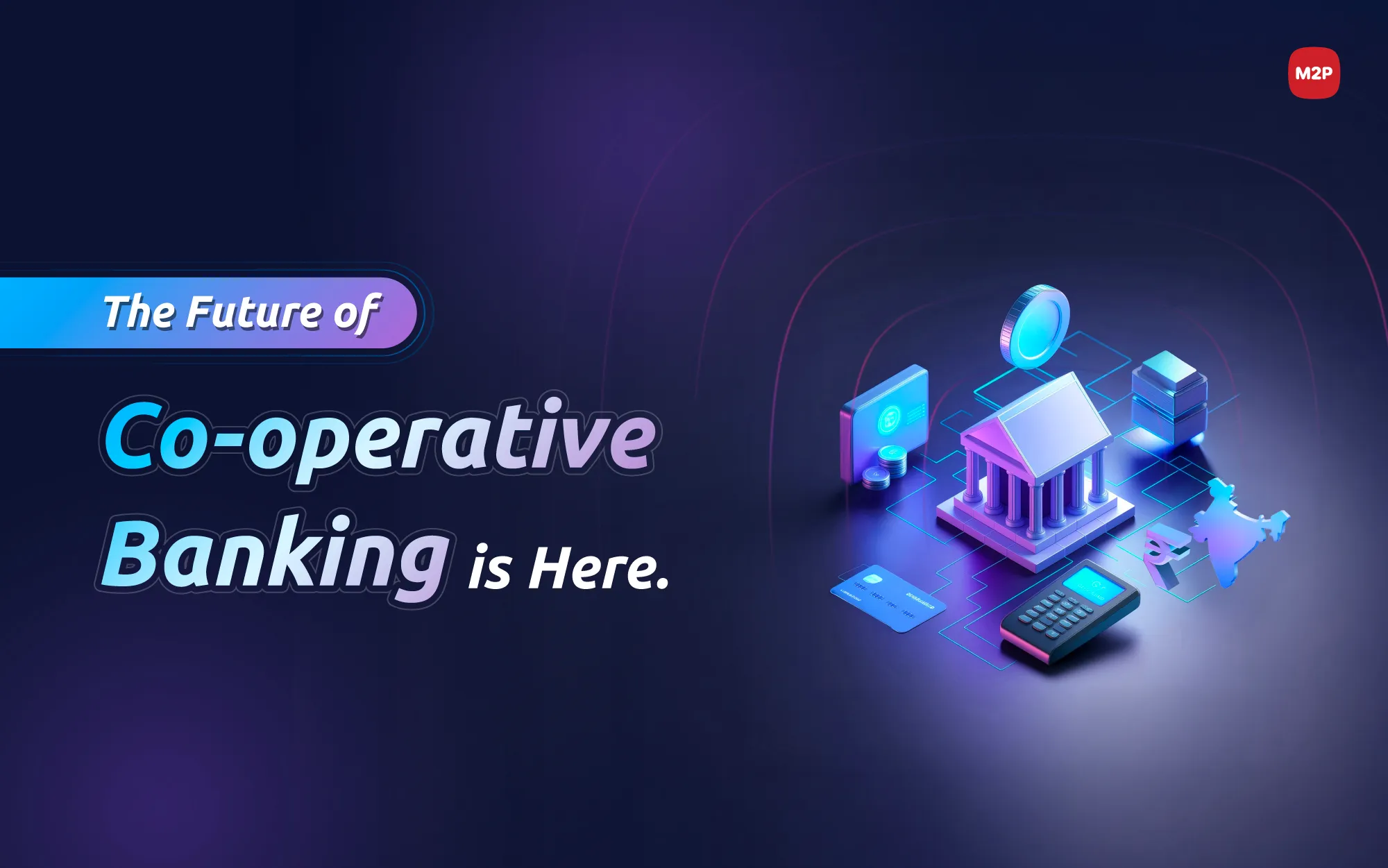
Why Turing CBS Is Best Suited for Indian Co-operative  Banks
Blog
Why Turing CBS Is Best Suited for Indian Co-operative Banks

Indian co-operative banks have long been the backbone of the nation's rural and urban financial landscape, playing a crucial role in financial inclusion. However, in an era of rapid digital transformation, these banks face a unique set of challenges that threaten their ability to compete and grow. The Reserve Bank of India (RBI) has responded with a clear and compelling mandate for modernization, pushing these institutions towards a more technologically advanced future.This is where a modern, agile, and robust Core Banking Solution (CBS) becomes not just an advantage, but a necessity. Turing CBS, a next-generation platform by M2P Fintech, is emerging as a powerful enabler for Indian co-operative banks, directly addressing their specific needs and aligning perfectly with the RBI's vision for a digital-first co-operative sector. While the market includes formidable players, Turing's unique combination of a truly 'composable' architecture, rapid innovation capabilities, and proven migration success makes it exceptionally well-suited for this sector's transformation.The Uphill Battle and the RBI's Modernization MandateCo-operative banks in India operate in a complex environment, grappling with a multitude of challenges that range from regulatory hurdles to technological deficits. Cases of collapse of institutions due to significant financial irregularities and governance failures, serves as a stark reminder of the risks involved. Recognizing these systemic issues, the RBI has introduced a series of regulations and vision documents to steer the sector towards technological adoption and greater resilience.Key Challenges and the Corresponding RBI Directives:Technological Gaps and Legacy Systems: Many co-operative banks rely on outdated, monolithic legacy systems that are rigid, expensive to maintain, and incapable of supporting modern products or integrating with new platforms like UPI. Any change to these systems can have unintended consequences, requiring extensive and costly regression testing RBI's Response: The RBI's Technology Vision for Cyber Security for Urban Co-operative Banks (2020-2023) introduced the 'GUARD' framework, which explicitly calls for "Utile Technology Investment" and encourages the adoption of cloud services to move away from on-premise legacy systems. The framework also mandates that banks create their own IT vision documents to plan for strategic upgrades Limited Resources and High Costs: Co-operative banks often operate with limited resources, making the substantial upfront capital investment required for modernization a significant barrier. Maintaining outdated hardware, software, and a specialized pool of developers familiar with legacy systems leads to exorbitant operational costs RBI's Response: The RBI has facilitated financial assistance and promoted shared service entities like the National Urban Co-operative Finance and Development Corporation (NUCFDC) for Urban Co-operative Banks (UCBs) and 'Sahakar Sarthi' for Rural Co-operative Banks (RCBs). These entities aim to provide centralized, cost-effective IT platforms, often on a "pay-per-use" model, to lower the technology cost burden for individual banks Inability to Innovate and Compete: The rigidity of monolithic legacy systems severely hampers a bank's ability to launch new products quickly, a process that can take months. This puts them at a disadvantage against commercial banks and fintechs RBI's Response: The 2025 Guidelines for Co-operative Banks and the Vision Document for UCBs (2025–2030) push for digital transformation, encouraging partnerships with fintechs and the rollout of mobile banking, internet banking, and UPI options. Crucially, the Draft Master Direction on Business Authorisation makes having a fully implemented CBS a mandatory condition for opening new branches, effectively making modernization a license for growth Governance and Regulatory Complexities: Co-operative banks are subject to dual control and face challenges in governance, auditing, and regulatory reporting, which is made more difficult by data trapped in legacy system silos. The entire sector is under close regulatory watch, especially following high-profile failures RBI's Response: The new frameworks emphasize stronger governance, risk management, and cybersecurity oversight. The 'GUARD' framework's first pillar is "Governance Oversight". Furthermore, new shared platforms are designed to automate the generation of regulatory reports for the RBI and NABARD, ensuring compliance and enabling better data analysis  Turing CBS: A Tailor-Made Solution for TransformationTuring CBS is a cutting-edge Core Banking Solution designed to address the very challenges that Indian co-operative banks face, aligning perfectly with the RBI's modernization roadmap. Its modern architecture, comprehensive features, and proven execution capabilities provide a clear pathway for these institutions to not only survive but thrive in the digital age.Core Architecture: A Foundation for Agility and ResilienceAt its heart, Turing CBS is built on a cloud-native, microservices-based architecture. This modern, 'composable' approach structures the application as a collection of loosely coupled, independently deployable services. This is a significant leap from the traditional monolithic or even the more common modular N-tier architectures used by some competitors, where code is more interwoven, making updates risky and slow. The benefits of this true microservices architecture include:Independent Scalability: Individual services can be scaled based on demand, such as scaling up payment services during a festival season without affecting other operations Enhanced Resilience: The failure of one service does not bring down the entire system, ensuring higher availability of banking services for members Technology Diversity: Different services can be built with the best technology for the job, ensuring the platform remains modern and efficient Flexible Deployment: As a cloud-agnostic platform, it can be deployed on-premise, in the cloud, or consumed as a Software-as-a-Service (SaaS) model. This allows banks to adopt flexible strategies, such as a multi-cloud approach, to optimize usage and costs  Low-Code/No-Code Platform: Accelerating Innovation from Months to DaysA standout feature of Turing CBS is its integrated low-code/no-code platform, which empowers bank employees with minimal technical expertise to create and launch new financial products through a visual interface. This drastically reduces dependency on IT teams and accelerates time-to-market from months to a matter of days or even hours.Comprehensive and Specialized Banking ModulesTuring CBS offers a full suite of modules to streamline operations and cater specifically to the co-operative model.Core Banking Modules: Includes an intuitive Customer Relationship Management (CRM) module, a General Ledger, and a bundled Treasury platform Specialized Co-operative Functionalities: The platform is tailored for co-operatives with features for Member Share Management, automated Dividend Calculation, and support for Group Lending to Self-Help Groups (SHGs) and Joint Liability Groups (JLGs). It also supports regional languages to enhance accessibility for a diverse member base  Cost-Effective and Resource-Efficient ModelTuring CBS's cloud-based, SaaS model eliminates the need for massive upfront capital expenditure on hardware. This shifts the cost to a predictable operational expense, directly addressing the "limited resources" challenge. This model mirrors the cost-effective, "pay-per-use" approach promoted by RBI-backed entities like NUCFDC's Sahakar CBS, making state-of-the-art technology accessible and affordable.The Competitive Landscape: How Turing Stands ApartThe CBS market for co-operative banks is diverse, featuring global giants, specialized local vendors, and new government-backed initiatives:Global Leaders: These platforms are powerful, feature-rich, and increasingly adopting composable, API-first principles. They offer strong data and AI suites. However, their primary focus is often on larger commercial banks, and their solutions can be complex and costly for smaller co-operatives.Specialized Vendors: These providers offer solutions deeply tailored to the co-operative sector, with excellent modules for member management, shares, and specific regulatory reporting. While strong in their niche, their architectural alignment with modern 'composable' principles like microservices is often less explicit than Turing's.Government-Backed Initiatives (Sahakar CBS): The NUCFDC's "Sahakar CBS" is a significant development, aiming to provide a standardized, affordable, cloud-based solution for UCBs on a pay-per-use model. While promising, it is still in the early stages of rollout and focuses on standardization, which may offer less flexibility than a truly composable platform.Turing CBS differentiates itself by combining the best of these worlds: the modern, 'composable' architecture of the global leaders, the specialized focus required for co-operatives, and an agile, cost-effective model that aligns with the sector's needs. Case in Point: A Small Finance Bank MigrationA key differentiator that moves Turing CBS from theory to proven practice is its ability to execute complex migrations rapidly and seamlessly. The case of a Small Finance Bank is a powerful testament to this capability.The Challenge: The bank had a monumental task of migrating over 1.5 million customers and 111 branches from an outdated legacy system. The data was compromised and required meticulous cleansing and validation. The bank needed to execute this under intense regulatory scrutiny with minimal disruption The Solution: Using Turing CBS and a proprietary data migration platform, M2P Fintech successfully migrated the entire bank in a record 88 days without a parallel run. The migration followed a structured process of discovery, data mapping, automated ETL (Extraction, Transformation, Loading), rigorous validation, and a "big bang" go-live The Enablers: Turing's microservices architecture simplified the complexity, while its API-first design enabled seamless integration with payment ecosystems like UPI and IMPS. This rapid, successful migration allowed the bank to quickly meet RBI mandates and begin its journey as a modern, digital-first institution Enhanced Security and Automated ComplianceTuring CBS is developed with robust security features, including a pre-integrated Fraud Risk Management (FRM) engine, AI/ML for financial risk management, and end-to-end data encryption. This focus on security directly aligns with the RBI's 'GUARD' framework for cybersecurity. The platform also automates the generation of regulatory reports for the RBI and NABARD, simplifying compliance and addressing key governance objectives under intense regulatory watch.The M2P AdvantageIndian co-operative banks are at a critical juncture, compelled by the Reserve Bank of India to embrace digital transformation to remain relevant and competitive. The challenges they face—from technological gaps and intense competition to regulatory complexities and resource constraints—require a comprehensive and forward-thinking solution. The RBI has laid out a clear path forward, pushing for the adoption of modern CBS, cloud technology, and digital payment infrastructure.While the market offers several options, from global giants to specialized vendors, Turing CBS emerges as the best-suited partner for this transformation journey. Its modern, flexible, and secure platform is specifically designed to address the unique needs of co-operative banks and aligns perfectly with the RBI's strategic directives. By offering a rapid, cost-effective, and seamless transition to a modern core banking system, Turing CBS empowers these institutions to:Meet RBI Mandates with Proven Speed: Adopt a modern, secure, and integrated CBS that is a prerequisite for growth, as proven by the record-breaking 88-day Unity Bank migration Out-innovate with Agility: Use a low-code/no-code platform to launch new products in days, not months, empowering business users directly and gaining a competitive edge Optimize Costs and Resources: Improve operational efficiency and reduce costs through a cloud-based, "pay-per-use" model that eliminates large upfront capital expenditures Enhance Security and Ensure Compliance: Leverage a pre-integrated FRM engine and automated reporting, in line with the RBI's 'GUARD' framework Serve Members Better: Utilize specialized co-operative modules, digital channels like UPI, and support for regional languages to cater to a diverse member base Future-Proof Operations: Build on a true microservices and API-first architecture that allows for easy integration with fintech partners and future technologies, ensuring long-term relevance and adaptability In essence, Turing CBS is not just a software solution; it is a strategic enabler that provides the optimal blend of modern architecture, rapid innovation, and specialized functionality. It helps Indian co-operative banks bridge the digital divide, overcome their inherent challenges, and confidently step into the future of banking as envisioned by the RBI.

Apr 3, 2026
How AI Agents Are Redefining the Lending Lifecycle
Blog
How AI Agents Are Redefining the Lending Lifecycle

There is a version of AI in lending that most institutions have already tried. It looks like this: a bureau-integrated scoring model sitting inside the underwriting workflow, a document OCR tool bolted onto the LOS, a collections dashboard with risk segmentation. Each one is useful. Each one is isolated. Each one creates a new integration overhead while solving a narrow problem. This is AI-enabled lending. It is not the same as AI-native lending. The distinction matters enormously - not as a marketing label, but as an architectural reality that determines whether AI delivers compounding operational gains or stays in a collection of disconnected experiments. The difference comes down to one thing: agents. In 2026, the most consequential shift in lending technology is the move from AI tools to AI agents - purpose-built, domain-trained systems that don't just process inputs but orchestrate multi-step workflows, act on decisions, and hand off to the next stage of the lifecycle with full context intact.  Why Agents, and Why Now An AI tool answers a question. An AI agent completes a workflow. When a document arrives in the origination queue, an AI tool might extract the text and flag anomalies. An AI agent classifies the document, extracts structured data, runs 200+ validation checks, reconciles against bureau data, updates the application record, routes exceptions to the right reviewer, and triggers the next step in the origination journey, without a human touching any of it until a genuine decision point is reached. An AI agent in lending is a purpose-built, domain-trained system that autonomously orchestrates multi-step lending workflows - completing an end-to-end task such as document validation or collections campaign orchestration and handing off to the next lifecycle stage with full context intact. The Problem with Monolithic AI in Lending Large, general-purpose AI models are impressive at many tasks and poor at the specific ones that lending requires. Lending is a domain where: Errors have asymmetric consequences. A misclassified income document affects underwriting, approval, disbursement, and potentially collections years later Auditability is non-negotiable. Every AI decision needs a traceable rationale for regulators, auditors, and risk teams Context is stage-specific. Origination signals (identity, income, intent) are completely different from collections signals (behavior, capacity, sentiment, reachability) Policy changes constantly. Agents with configurable rule layers absorb policy changes without retraining.This is the agent-first architecture underpinning M2P's Core Lending Suite. What follows is a stage-by-stage breakdown of how it works in practice. Stage 1: Origination Agents Origination is simultaneously the highest-volume and most error-prone stage of the lending lifecycle. Every dropout is a customer lost and a cost incurred with zero revenue. The origination agent layer collapses TAT and improves STP by automating every step that doesn't require human judgment. Document Intelligence Agent Classifies documents across 100+ types using ML-based classification models Extracts structured fields using predefined taxonomy for each document type Runs 200+ automated validation checks: completeness, blur detection, cross-field consistency, authenticity markers Routes output to appropriate downstream system or reviewer queue automatically Production metrics: Loan document TAT: 24 hours → under 2 minutes 16+ document types extracted and validated per application 70+ document types classified, quality-checked, and auto-routed STP improvement: 10x over manual processing Conversational Application Agent A multilingual chat and voice interface guiding borrowers through the application journey in real time - answering eligibility questions, clarifying required documents, handling incomplete submissions, and capturing structured data from unstructured conversations. Supports regional Indian languages for MFI, rural MSME, and direct-to-customer lending. Instant Eligibility Agent Runs soft bureau checks and affordability heuristics at the point of application - before the full credit assessment, to generate pre-approved offer ranges in seconds. Integrates with Account Aggregator for real-time financial data.  Output: a ranked set of offers (product, amount, tenure, ROI) tailored to the borrower's verified financial profile. Stage 2: Credit Assessment & Underwriting Agents Underwriting is where lending economics is made or broken. Bad underwriting at origination shows up as NPA two years later. The challenge isn't speed alone - it's better decisions faster, with full auditability, across thin-file and informal-income borrower profiles. Credit Scoring Agent Aggregates signals from CIBIL, Experian, Equifax, CRIF, bank statement analysis, GST return data, Account Aggregator feeds, and custom scorecard models, producing a composite credit score with explainable feature contributions. Triangulated Household Income (HHI) Model for MFI/informal income: Bureau signals (CRIF/Equifax): 45% weight Field officer assessment inputs: 30% weight AI-extrapolated income model: 25% weight  Every score output includes a human-readable rationale. This explainability enables underwriters to override, regulators to audit, and the model to be challenged and improved. Financial Spreading & CAM Generation Agent For secured lending, MSME, and LAP, the Credit Assessment Memorandum (CAM) traditionally requires an analyst to manually spread financials, compute 50+ ratios, benchmark against sector norms, and write the credit narrative, hours to days per case. The CAM Agent automates the entire process: ingests financial statements (ITR, audited accounts, GST returns, bank statements), auto-computes the full ratio suite (DSCR, FOIR, EBITDA margins, trend analysis), benchmarks against sector data, red-flags credit risks, and generates a structured credit memo using NLG. Production impact: CAM generation time reduced from days to minutes. Analyst throughput increases 5–8x on MSME and LAP portfolios Fraud Detection Agent Operates across three layers simultaneously: Identity: Synthetic identities, duplicate KYC, proxy attendance in group lending Document: Tampering, OCR inconsistencies, metadata anomalies Behavior: Graph analytics for suspicious application patterns - device clustering, address clustering, defaulter network linkages  For MFI: AI face match and liveness detection, geo-tagged and time-stamped audit trails, automated blacklist checks across geographies. Computer Vision Assessment Agent (MFI / Rural) Addresses the core challenge in microfinance: most borrowers are in the informal sector with no formal income documentation. The Computer Vision Agent analyses field survey photographs to infer household economic status: Validated Exterior: Classifies construction type (kutcha/semi-pucca/pucca) to assess asset stability Interior Assets: Detects proxies for household income (appliances, furnishings, electronics) Agricultural/Livestock: Counts and classifies farming assets for agriculture income estimation Utility Vehicles: Identifies vehicle types as mobility and income indicators  Outputs feed directly into the Triangulated HHI Model — converting subjective field observations into objective, auditable data points. AI Smart Scheduler & Route Optimization Agent Applies Operations Research models to field geography - village clusters, center locations, loan officer capacity, meeting constraints, to compute the optimal sequence of center meetings and travel routes. Pushes; sequenced GPS itineraries to the offline mobile app. Physical travel distance reduced by up to 35% More center visits per field officer per day without headcount increase Stage 3: Disbursal Agents Disbursal Orchestration Agent Coordinates the full pre-disbursal checklist: final document verification, sanction letter generation, e-signing, compliance holds, escrow routing for co-lending, multi-tranche payment scheduling. Executes disbursement through the appropriate payment gateway or CBS integration. For co-lending; handles triple schedule generation (borrower, originator, partner), blended rate computation, fund split configuration, and escrow automation, aligned to RBI 2025 co-lending guidelines. Document Generation Agent Automates sanction letter production, loan agreements, and KFS (Key Fact Statements), with regional language support, version control, and integrated e-signing. Eliminates legal and operations overhead while ensuring regulatory consistency. Stage 4: Servicing Agents Early Warning Agent The highest-ROI agent in the post-disbursal lifecycle. Detects credit deterioration before it becomes a DPD event. Monitors continuously: Repayment behavior: Payment timing drift, partial payment patterns, NACH bounce frequency Bureau signals: Monthly refreshes for new delinquency, hard enquiries, restructuring flags Behavioral signals: App login frequency, support contact patterns, collateral market value Transaction-level: Bank statement feed anomalies, cash flow interruptions Portfolio economics: Accounts resolved at SMA-0 cost a fraction of those worked at 60+ DPD. The NPA never appears in the book. Payment Reconciliation Agent Aggregates multi-channel receipts (NACH, UPI, BBPS, cash, field) into a single reconciliation view. FIFO logic: oldest overdue EMI first. For MFI; Offline-first cash reconciliation with auto-sync on connectivity restoration. Customer Service Agent 24x7 multilingual conversational agent: account queries, EMI reminders, statement requests, grievance intake, repayment assistance. Sentiment analysis flags distressed borrowers for proactive human outreach. Cross-Sell & Propensity Agent Runs propensity models against the live servicing portfolio to identify borrowers with the highest conversion likelihood on top-ups, product upgrades, or cross-sell offers. Outputs ranked next-best-action recommendations with offer parameters pre-computed through the BRE. Stage 5: Collections & Recovery Agents Collections Orchestration Agent Replaces static calling lists with intelligent, dynamic account allocation and omnichannel campaign orchestration. Segments delinquent portfolio by DPD bucket, repayment propensity, and intervention history, routing each account to the optimal channel at the optimal time. Collections accounting logic: FIFO: Oldest overdue EMI collected first Product-level apportionment strategy Zero advance parking; excess knocks next scheduled EMI Instant receipt sharing via PDF/SMS at point of collection Field AgentAn AI‑driven field management platform that intelligently manages and optimizes on‑ground collection operations. The system enables geo‑clustering and route optimization to maximize agent productivity and coverage. Field agents are dynamically allocated based on performance history, skill sets, language capability, and local familiarity. Real‑time visit logging, geo‑tagged proof of visits, and on‑field digital payment collection ensure transparency, compliance, and faster recoveries.Production impact: Enabled AI‑driven collections orchestration and field agent allocation through dynamic contract prioritization—driving more focused recovery actions and improved execution efficiency.Early Warning to Collections Feedback Loop One of the compounding advantages of an agent-first architecture: agents share data. The Early Warning Agent's risk flags feed the Collections Orchestration Agent's segmentation model. Collections outcome data feeds back into Early Warning's predictive model. The system gets more accurate with every collection cycle. This feedback loop doesn't exist in a fragmented stack. Governance: The Layer That Makes Agents Deployable Explainable Decisioning: Every score, flag, and agent action produces human-readable rationale with decision metadata Immutable Audit Trails: Every agent action logged end-to-end with full lineage — regulator queries answered in minutes Policy-as-Code: Credit policy and compliance rules codified directly into agent workflow logic — policy updates propagate automatically Controlled Learning Loops: Champion-challenger rollouts with human-in-the-loop gates. Risk owners retain rollback controls Observability & Drift Monitoring: Real-time dashboards track model performance, decision distribution shifts, and operational KPIs The Architecture Argument: Why This Is Difficult to Replicate The agent layer described above is not a feature set; it is an architectural commitment that took years to build and that compounds in value over time. Lenders considering point-solution AI integrations face a specific trap: each tool solves a problem in isolation but creates a new one at the integration boundary. The Document Intelligence tool outputs data that the Credit Scoring tool doesn't natively accept. The Early Warning model flags risk but has no direct pipe into Collections. The CAM generator requires manual transfer into the LOS. When AI is built into the lending core - on a unified data model, with shared context across agents, and orchestration that manages handoffs automatically, the integration problem disappears. The compounding effect becomes the default, not the exception. The Full AI Agent Map Across the Lending Lifecycle Lifecycle Stage Agent Primary Output Origination Document Intelligence Agent Validated, structured document data in <2 min Origination Conversational Application Agent Guided multilingual onboarding, reduced dropout Origination Instant Eligibility Agent Pre-approved offers in seconds Underwriting Credit Scoring Agent Explainable composite credit score Underwriting CAM Generation Agent Audit-ready credit memo in minutes Underwriting Fraud Detection Agent Identity, document, and behavioral fraud flags Underwriting Computer Vision Agent Objective HHI assessment (MFI/rural) Underwriting AI Smart Scheduler Optimized field routes, 35% travel reduction Disbursal Disbursal Orchestration Agent Same-day disbursal, compliant fund flows Disbursal Document Generation Agent Auto-generated sanction letters, agreements, KFS Servicing Early Warning Agent Pre-SMA risk flags, proactive intervention triggers Servicing Payment Reconciliation Agent Clean multi-channel cash application Servicing Customer Service Agent 24x7 query resolution, distressed borrower detection Servicing Cross-Sell Agent Propensity-ranked next-best-action offers Collections Collections Orchestration Agent Intelligent omnichannel recovery campaigns Collections OTS Recovery Agent Data-driven settlement for 180+ DPD accounts  What This Means for Lending Institutions in 2026 The lending institutions pulling ahead in 2026 share a common characteristic: they have stopped treating AI as a departmental tool and started treating it as operational infrastructure. The credit team doesn't run an AI model — they run a credit decisioning workflow where an AI agent handles the systematic steps and surfaces only the genuine decision points for human judgment. Collections don't use an AI dashboard; the agent orchestrates the recovery campaign, and the manager reviews exceptions. This shift from AI as a tool to AI as the operating layer, is what makes the difference between AI that shows up in a product demo and AI that shows up in the P&L. See the full agent stack in a live lending environment. Book a demo with M2P's lending specialists at https://m2pfintech.com/contact-us/

Apr 1, 2026
What Are Flexible Credentials? A Quick Introduction for Issuers
Blog
What Are Flexible Credentials? A Quick Introduction for Issuers

In the fast-evolving world of financial technology, the demand for more personalized and flexible payment solutions has never been greater. Consumers today expect a seamless and intuitive payment experience that adapts to their financial needs in real time. This is where Flexible Credentials come into play - a revolutionary technology that is set to redefine the way we think about cards payments.What Are Flexible Credentials?At its core, a Flexible Credential is a feature that allows a single payment card to be linked to multiple funding sources. Imagine a single card that allows the holder to access their debit account for everyday purchases, your credit line for larger expenses, and even a Buy Now, Pay Later (BNPL) - all at the point of sale. This is the power of flexible credentials.This technology is being introduced by major payment networks, including Visa with its "Flexible Credential" and Mastercard with the "One Credential." These solutions are designed to give consumers more direct choice at the point of sale, allowing them to select the funding source for each transaction.Why Should Banks and Issuers Pay Attention?For financial institutions, embracing flexible credentials is not just about keeping up with the latest trend; it's a strategic move to enhance customer loyalty and drive growth.Higher spends through top-of-the-wallet behaviour: When one card can handle any payment need - debit, credit, or installments - it naturally becomes the customer's primary choice, leading to increased usage and higher overall spending.Increased cross-sell & unlock new revenue lines: By integrating credit and BNPL options into a single card, you can seamlessly introduce customers to new financial products, creating opportunities for interest-based revenue and other fee-based services.Operational efficiency and lower costs: Managing a single, multi-functional card program can be more streamlined and cost-effective than maintaining separate debit, credit, and BNPL products, reducing overhead and simplifying operations.Improve personalization & Data Insights: A single card provides a unified view of a customer's spending habits across all payment methods. This rich data allows for deeper personalization of offers, services, and communications.Competitive differentiation: In a crowded market, offering a truly flexible, all-in-one payment solution positions your institution as a forward-thinking innovator and sets your brand apart from the competition.Increase transaction volume: The sheer convenience of having multiple payment options available on one card encourages more frequent use for a wider variety of purchases, directly boosting your total transaction volume.Deepen customer loyalty and increase retention: By providing a superior, more convenient payment experience that adapts to their financial needs, you give customers a compelling reason to stay and build a stronger, more positive brand association.M2P's Vision for a Flexible FutureAt M2P Fintech, we believe payments experience will be remain consistent regardless of the type of product the customer uses. Flexible credentials is the capability that helps issuers build such an experience. Our platform is designed to help issuers like you seamlessly enabled these capabilities into your existing infrastructure. We manage the requirements/ standards set out by networks to enable flexible credentials for issuers, leaving the banks to focus on curating the world class product offerings to their customers. As Shyam Kumar, VP of Sales at M2P Fintech, explains, the shift is more than just technological; it's strategic. "Visa Flex Credentials is not just reimagining payments, it’s redefining strategy itself. By turning a single payment credential into an intelligent orchestration layer, Visa Flex Credentials redefines customer experience where flexibility feels effortless, and strategy is embedded into every transaction."This focus on user empowerment and tangible business outcomes is critical, especially in a market with diverse payment habits. Mahesh Karuppiah, Senior Director at M2P Fintech, adds, "Flexible Credentials are set to give spenders real control by letting them decide which wallet pays for each transaction. UPI drives everyday convenience in India, but cards and credit lines still lead for large purchases, rewards, and pay‑over‑time options. Bringing all stored values onto a single card will increase share of wallet and make the card meaningful again."The Road AheadThe journey towards a more flexible and personalized payment ecosystem has just begun. Flexible credentials are more than just a new feature; they represent a fundamental shift in how we experience payments. For banks and financial institutions, the time to embrace this change is now. By partnering with M2P Fintech, you can be at the forefront of this transformation, offering your customers a payment experience that is truly tailored to their lives.

Mar 31, 2026
How M2P Enables UPI Autopay Interoperability for Banks
Blog
How M2P Enables UPI Autopay Interoperability for Banks

The next evolution in recurring payments is here. NPCI's mandate for UPI Autopay interoperability is set to create a more resilient, competitive, and customer-centric payment ecosystem. For banks and financial institutions, this presents both a compliance requirement and a strategic opportunity.   The core challenge? The significant development effort required to upgrade legacy systems. At M2P Fintech, we have engineered our UPI Switch to do the heavy lifting for you. As a leading payment infrastructure provider, we empower banks to seamlessly adopt this new framework, reduce go-to-market time, and deliver a superior experience to merchants and end-users. The Challenge: Why Interoperability Requires Deep System Changes Previously, UPI Autopay mandates were rigid. They locked merchants to a single Payment Service Provider (PSP) and tied users to the UPI app where the mandate was created. This created business continuity risks and friction for everyone involved. The new interoperability framework solves this but requires substantial technical updates for banks acting as acquirers, payers, or remitters. Core processes must be re-architected to handle: The generation and validation of the new Merchant Identifier Code (MIC). New APIs for fetching and porting mandates across different UPI apps. Complex transaction routing logic to support PSP fallback. Developing these capabilities in-house is a time-consuming and resource-intensive process. The Solution: M2P's UPI Switch for Effortless Compliance M2P's UPI Switch is a ready-to-deploy solution that abstracts away the complexity of this transition. We provide the core infrastructure needed for banks and fintechs to become fully compliant with the new guidelines, fast. Here’s how we empower our banking partners: 1. Acquire and Execute Mandates with Full Interoperability The new framework replaces VPA-based validation with the Merchant Identifier Code (MIC), a unique code tied to the merchant's PAN. This allows a mandate to be executed through any of the merchant's onboarded PSPs. How M2P helps: Our UPI Switch is already equipped to handle MIC-based validation and routing. We enable banks to offer their merchants true acquiring interoperability, ensuring business continuity for UPI mandates. If a primary PSP fails, our system automatically reroutes the transaction through a secondary provider, drastically reducing payment failures and protecting revenue streams.  2. Empower Users with Mandate Portability The NPCI guidelines empower users to view and transfer their active mandates between any UPI app. This feature, known as UPI mandate portability, is critical for customer retention and delivering a modern user experience. How M2P helps: M2P's platform readily supports the new Fetch Mandate and Port Mandate APIs. By partnering with us, banks can quickly offer these features through their own UPI apps without the need for extensive internal development. You can provide your customers with the freedom they expect, fostering loyalty and a competitive edge. Partner with M2P to Go-Live Faster The transition to an interoperable UPI Autopay system is not just about compliance; it’s about future-proofing your payment offerings. With M2P, you can avoid the long development cycles and operational hurdles. Our UPI Switch provider platform delivers: Accelerated Compliance: Go live with the new interoperability features in a fraction of the time. Reduced Development Overhead: Free up your internal tech resources to focus on your core business and product innovation. Enhanced Resilience: Leverage our sophisticated routing and fallback logic to offer higher success rates to your merchants. Expert Guidance: Partner with a team that has deep expertise in the intricacies of India's payment ecosystem. The era of locked-in recurring payments is over. If you are a bank or financial institution looking to navigate the transition to UPI Autopay interoperability with speed and confidence, M2P Fintech is your trusted partner. Ready to enable the future of recurring payments? Contact us today to learn more about our UPI Switch solution.

Mar 27, 2026
Co-Lending 2.0: Why India’s Next Credit Decade Needs an Orchestration-First Stack
Blog
Co-Lending 2.0: Why India’s Next Credit Decade Needs an Orchestration-First Stack

Co‑Lending in India has quietly crossed a tipping point: what began as a compliance‑driven structure for Priority Sector Lending is now emerging as the default operating model for scalable, collaborative, and capital‑efficient credit delivery. As the Reserve Bank of India’s 2025 Co‑Lending Arrangements Directions come into force on January 1, 2026, the industry is being pushed to embrace a defining shift: the next decade of co‑lending will be led by those with the most adaptable, integrated, and intelligent operating stack. That is why modern lenders are not “optimizing” their co‑lending workflows; they are re‑architecting their co‑lending stack end‑to‑end. M2P’s AI‑Native Core Lending Suite (CLS) delivers this precise capability: orchestration‑first architecture built natively for multi‑lender Co‑Lending 2.0. Co‑Lending 2.0: The Operating Model for the Next Decade Co‑lending has become a mainstream capital deployment strategy that underpins growth in unsecured retail, MSME, and new‑to‑credit segments. The 2025 Directions push this further by insisting that every co‑lent asset behaves like a jointly owned, jointly governed, and jointly visible exposure across all partner Regulated Entities (REs). This shift, however, has exposed a deep mismatch between what co-lending requires and what most lenders’ technology stacks can support. Traditional LOS/LMS systems were built for single‑owner, single‑policy books. Co-lending demands multi-owner, multi-policy, yet single‑truth operations. That is an orchestration challenge at the core, not a surface‑level workflow tweak. The result is a sharp industry realization: to make co‑lending scalable, compliant, and profitable over the next decade, lenders must rethink how they originate, account, sync, and settle jointly‑owned loans, not as an add‑on process, but as a first‑class operating model. Why Co‑Lending Became Operationally Complex As co‑lending volumes have scaled, the cracks in traditional architectures have widened into systemic pain points. Lenders consistently report five recurring issues: Fragmented System DependencyEach participating lender continues to operate its own LOS/LMS stack, with distinct rules, data models, and workflows. As a result, the same co‑lent asset is represented differently across partners, making the overall construct fragile and reconciliation inherently high‑friction. Limited Transparency and Delayed Visibility Reliance on manual exchanges and batch file transfers means operational data reaches partners with a built‑in time lag. This delay obscures emerging issues, elongates reconciliation cycles, and elevates aggregate financial and counterparty risk. Absence of Real‑Time Synchronization Effective co‑lending presupposes a single, synchronized version of truth for every borrower, facility, and cash flow across all parties. Without near real‑time alignment, regulatory exposure increases, disputes become more frequent, and governance weakens. Escalating Regulatory Complexity The 2025 RBI Directions introduced stricter requirements, minimum 10% retention by each RE, blended rate computation, unified NPA classification, and borrower‑level asset‑class uniformity. Complying at scale demands tightly integrated systems, incremental patches on legacy architecture are no longer adequate. Complex Fund‑Flow and Escrow Obligations Pay‑ins, pay‑outs, and waterfall allocations now need to be rule‑driven, fully auditable, and executed with near‑zero tolerance for error. Any inconsistency in escrow handling or settlement logic can rapidly translate into compliance breaches, partner friction, and reputational risk. Put together, these challenges make one thing clear: co‑lending at scale is not a program management problem that can be solved with more manpower or more Excel. It is an orchestration challenge solved by orchestration-first platforms engineered for scale. M2P’s Co‑Lending 2.0 Architecture M2P’s Core Lending Suite approaches co-lending as a multi-party operating system, not just a feature. It weaves together LOS, LMS, middleware, and fund flow into a single, co‑lending‑native fabric. Unified LOS for Co‑Origination The journey starts at origination, where fragmentation usually begins. M2P’s LOS is designed to treat co‑lender participation as a first‑order configuration, not an afterthought. Co‑lender selection within LOS ensures that partner allocation is embedded in the application flow itself, instead of being decided off‑system or through manual mapping later. Co‑origination workflows allow multiple REs to participate in a single journey while preserving their individual policies and approval paths. Document generation aligned to partner rules ensures that the same application surfaces partner‑specific formats, annexures, and clauses without manual intervention. A future BRE‑driven ranking engine will enable smart partner selection based on appetite, exposure, pricing, and risk criteria. Bulk approval pathways support scale, especially when lenders are working with large programmatic or distribution partners and need to process high volumes efficiently. By converging co‑lender selection, documentation, and decisioning within one LOS, the platform prevents divergence from day zero. LMS for True Co‑Lending Accounting If origination sets the tone, the LMS defines the long‑term integrity of co‑lending. M2P’s LMS is engineered for joint ownership and precise allocation. Supports a construct where Borrower RPS = Lender RPS + Originator RPS, ensuring that every rupee of repayment is mapped accurately across participants. Delta‑method support for originator share allows flexible structuring where the originator’s participation is computed as the balance after the primary lender’s share. Co‑lender capital contribution configuration enables granular definition of who brings how much capital into each pool or product. Upcoming blended ROI calculation engine will help lenders stay aligned with the RBI’s 2025 norms on blended rate computation. This is not single‑book accounting with a co‑lending label on top; it is accounting purpose‑built for shared books and shared risk. Middleware for Multi‑LMS Partner Sync The true potential of LMS emerges through partner interoperability, enabled by a robust middleware layer. Real‑time borrower data exchange over API/SFTP ensures that partner LMS systems stay in sync with key events, including disbursals, schedule changes, repayments, restructurings, and collections outcomes. Robust error handling & retry logic reduces breakage, prevents silent failures, and gives operations teams clear traceability. Dual CIC reporting supports consistent bureau behavior across partners, an increasingly important requirement for regulatory and risk alignment. Support for multiple partner LMS stacks acknowledges the reality that not every partner will modernize at the same pace, yet collaboration cannot wait. All REs operate against a single logical record, even if their physical systems differ. Escrow & Fund Flow Management Finally, the financial backbone of any co‑lending relationship lies in fund movement and reconciliation. M2P’s orchestration layer extends into this domain as well. Pay‑in/Pay‑out automation ensures that collections, settlements, and distributions to each RE follow pre‑defined, configurable rules. Escrow account creation & mapping at the program and partner level allows clean segregation, auditable flows, and regulatory comfort. Real‑time update propagation into LMS ensures that what moves in the bank mirrors what updates in the books. Retry and reconciliation support built into the orchestration layer reduces manual effort and shrinks the window for exceptions. The result is a co‑lending environment where operational and financial truths align. Both lenders operate on a single version of truth, eliminating the inconsistencies that traditionally plague co‑lending programs and exposing them instead to a predictable, auditable, and scalable model. How AI Agents Elevate Co‑Lending from Manual to Autonomous Once the structural foundation is in place, the next question is ‘how do you make co‑lending not just possible, but intelligent?’ This is where AI‑native, domain‑tuned agents fundamentally change the game. Document Intelligence Agent automates capture, classification, extraction, and fraud checks across applications. When both REs relies on the same verified, machine‑extracted data, data drift is minimized and exceptions shrink. Policy Compliance Agent enforces partner‑wise credit policies alongside RBI requirements, harmonizing decisioning so that one borrower doesn’t end up with two different risk realities. Collections Orchestration Agent uses waterfall logic, channel allocation, and recovery probability predictions to ensure that every rupee collected is optimally routed and accurately split across co‑lenders. Industry‑wide, the direction of travel is clear: lenders are moving from hard‑coded, rule‑based automation to agentic decisioning in areas that demand continuous coordination, judgment, and adaptation. Co‑lending, with its multi‑party nature, is a natural beneficiary of this shift. At the same time, RBI’s evolving Digital Lending Directions, with their emphasis on transparency, consent, auditable decision trails, and data governance, make AI‑driven consistency not just attractive, but necessary. Why Co‑Lending Needs a Next‑Gen Stack Now Regulatory Shift (2025–2026)The 2025 Directions stretch co‑lending into a more structured, supervised regime: broader applicability beyond PSL, minimum 10% retention per RE, unified NPA classification, blended interest rate computation, and expanded disclosure norms. Legacy stacks weren’t designed to ingest and operationalize these requirements natively. Without structural changes, lenders will end up with fragile compliance that doesn’t scale. Economics of Capital Efficiency Banks bring low‑cost capital but often lack last‑mile reach; NBFCs and fintechs bring origination depth but carry a higher cost of funds. Co‑lending aligns these strengths, enabling deeper penetration into unsecured, MSME, and new‑to‑credit portfolios while optimizing RoE across the ecosystem. Growth of Digital Distribution The rise of LSPs, marketplaces, and embedded credit journeys means that many new‑age originations are multi‑party by design. Co‑lending rails must plug into these flows cleanly, without adding latency or operational friction. Rising Demand for Standardization & Compliance Automation With stricter requirements around Key Fact Statements, data governance, oversight of digital lending partners, and digital audits, lenders can no longer rely on scattered systems and manual reconciliation. They need integrated platforms that can enforce policy, log actions, and generate audit‑ready trails by default. What M2P’s Co‑Lending Stack Unlocks for Lenders When you layer an orchestration‑first architecture with AI‑native intelligence and regulatory alignment, the value compounds across the lifecycle. Faster Go‑Live Cycles No‑code workflows and well‑defined API contracts enable lenders to launch new co‑lending programs in weeks, not quarters, critical in a market where partnerships and products are evolving rapidly. Real‑Time Multi‑Party Visibility Unified dashboards and shared views replace siloed MIS. All partners see the same exposure, same performance metrics, and same exception set, dramatically reducing reconciliation efforts. Lower Regulatory Exposure Policy engines aligned to RBI norms, combined with automated logs and explainable decision flows, improve audit readiness, and reduce the risk of supervisory findings. High Scalability Across Lenders & Products A single orchestration layer can support multiple partner LMS stacks and diverse products such as retail, MSME, secured, unsecured, without re‑engineering the core every time. Improved Underwriting & Risk Consistency AI agents coupled with a unified LOS make credit decisions more consistent across lenders, reducing cases where one partner’s standards lag or diverge. Operational Stability Automated fund flows, embedded retry logic, and systematic error handling shrink operational workloads and minimize financial leakages. In practice, this means lenders can treat co‑lending not as a fragile program to be ‘managed,’ but as a robust engine to be scaled. Co‑Lending 2.0 Is Here—Unified, Intelligent, and Regulatory‑Ready As India steps into the RBI’s 2025 co‑lending regime, the expectations on lenders are clear: operate with shared visibility, enforce standardized rules, maintain auditable trails, and scale responsibly across digital channels and asset classes. The old paradigm of stitching co‑lending on top of single‑owner systems is no longer tenable. M2P’s Core Lending Suite is built specifically for this inflection point: Unified LOS + LMS + Collections architecture that treats co‑lending as native, not peripheral AI‑native layer of domain‑trained agents that make decisions more consistent, explainable, and adaptive Real‑time orchestration/middleware fabric that keeps partner systems synchronized Escrow and fund flow automation aligned with emerging compliance expectations Bring AI-native co-lending from strategy to execution with a unified, future-ready operating model. Schedule a demo today. Follow us on LinkedIn and Twitter for insightful fintech bytes curated for curious minds like you.

Mar 17, 2026
How Branded Wallets Enhance Customer Stickiness and Lifetime Value
Blog
How Branded Wallets Enhance Customer Stickiness and Lifetime Value

In today's competitive market, businesses are in a constant battle to not only attract new customers but also to retain them. Customer acquisition is expensive, and every lost customer represents a significant loss of potential revenue. The solution lies in building a loyal customer base, and one of the most effective ways to achieve this is by creating a seamless, branded ecosystem that keeps your customers engaged. This is where branded wallets, powered by a robust prepaid card stack, come into play.The Modern Customer Engagement ChallengeTraditional loyalty programs, while beneficial, often fall short of creating true "stickiness." Customers are inundated with loyalty cards and apps that offer generic rewards and a disjointed experience. This often leads to low engagement and a failure to capture the customer's long-term loyalty. Businesses need a more integrated and value-driven approach to keep their customers drive repeat engagement.What are Branded Wallets and How Do They Help?A branded wallet is a digital wallet customized and offered by a non-financial institution, such as a retail brand, an e-commerce platform, or a service provider. It allows customers to store funds, make payments, and access exclusive rewards, all within the brand's ecosystem.Consider these use cases:For a large retail chain: A branded wallet can store loyalty points that are instantly convertible to cash for in-store purchases. This solves the customer's problem of tracking points and offers real-time benefits, encouraging them to choose the store over a competitor.For an FMCG company: A wallet can be used to offer direct-to-consumer cashback rewards on products purchased from any store. The customer simply scans the receipt, and the cashback is credited to their wallet, solving the challenge of brand loyalty in a multi-brand retail environment.These wallets are more than just a payment tool; they are a direct channel to your customers and a powerful driver of loyalty.The Hurdles of Building Your Own WalletWhile the benefits are clear, the path to launching a branded wallet is fraught with challenges for a typical company. The journey is complex and resource-intensive, involving:Licensing and Regulations: Navigating the labyrinth of financial regulations, including obtaining the necessary licenses to operate a payment instrument, is a significant barrier.Compliance and Security: Adhering to strict compliance mandates like KYC (Know Your Customer) and AML (Anti-Money Laundering) is non-negotiable. Building a secure infrastructure to prevent fraud and protect customer data requires specialized expertise.Technical Complexity: Developing the core technology, ensuring high uptime, and integrating with various payment networks is a massive undertaking that distracts from your core business.These obstacles can make the prospect of launching a wallet seem daunting, if not impossible, for most companies.The M2P Solution: Your Plug-and-Play Digital StackWe provide a comprehensive, plug-and-play Prepaid Card Stack that takes care of all the heavy lifting. Think of it as an out-of-the-box solution that allows you to launch your own branded wallet without the associated complexities.Our digital stack provides:Pre-built Compliance: Handle all the regulatory and licensing requirements, ensuring your program is fully compliant from day one.Bank-Grade Security: Built with robust, bank-grade security and risk management protocols to protect you and your customers.Seamless Integration: Suite of flexible APIs allows for quick and easy integration, empowering you to build a feature-rich wallet app and get to market faster.By partnering with M2P, you can overcome the challenges and focus on what you do best: serving your customers.Unlock Business Growth with a Branded WalletOnce you have the right foundation, you can unlock the transformative power of a branded wallet. Benefits:Seamless Payment Experience - By offering a frictionless, one-click payment process, reduce complexity from transactions and encourage repeat purchases.Personalized Rewards and Offers - Branded wallets allow you to offer spend-based personalized rewards and discounts that are truly relevant and meaningful.Enhanced Brand Engagement - A branded wallet keeps your brand top-of-mind. Every transaction, every notification, and every reward is an opportunity to reinforce your brand's value proposition.Exclusive Access and Benefits - Offer exclusive access to sales and new products to your wallet users, making them feel like valued insiders and increasing their loyalty to your brand.Driving Sustainable Growth through Integrated Wallet SolutionsIn a market where customer loyalty is a key competitive differentiator, branded wallets have evolved from a supplementary tool to a strategic necessity. They are a powerful tool for building a loyal customer base and increasing customer lifetime value. By leveraging a plug-and-play solution, you can create a branded wallet experience that not only enhance the customer experience but also drives significant business growth and creates a sustainable competitive advantage.Follow us on LinkedIn and Twitter for insightful fintech bytes curated for curious minds like you.

Mar 16, 2026

Power What’s Next in Fintech

Partner with M2P Fintech to build seamless, compliant, and scalable financial solutions that redefine fintech possibilities.

Get Started

© 2025 M2P Fintech

Report vulnerabilities of reportbug@m2pfintech.com

  • linkedin
  • twitter
  • instagram
  • facebook